


The role of subnational actors in climate action, including the energy transition, has become increasingly vital in this era of escalating climate risks. Insights emerging from the Bangkok Climate Action Week’s deep dive session on Localising Adaptation and Mitigation: Finance, Power and Practice highlighted a consistent finding across Indonesia, the Philippines, Nepal, and India, that Decentralized Renewable Energy (DRE) is not only a mitigation measure but also central to resilience, economic empowerment, and just transition. Community-based renewable initiatives—from solar-powered cold storage to women-managed irrigation systems—show that local innovation often leads the way. These examples demonstrate that DRE is not merely about technology deployment, but a comprehensive process that involves governance, finance, skills, and local participation. They also demonstrate why national ambitions must align with what is feasible and effective at the local level.
Lessons from Indonesia: Subnational Realities That Should Guide National Policy
Indonesia’s experience in East Nusa Tenggara (ENT)/Nusa Tenggara Timur (NTT) illustrates how provincial realities could shape the national climate outcomes. NTT remains dependent on diesel-based power generation, while Indonesia’s power sector planning – particularly under PLN’s Electricity Supply Business Plan (Rencana Umum Penyediaan Tenaga Listrik/RUPTL) 2025-2034 – sets a clear direction to gradually phase out all diesel power plants within the next three years. In eastern Indonesia, the diesel phase-out policy has been explicitly positioned as a key initiative for scaling renewable energy, especially through the conversion of diesel-based generation into renewable energy systems. However, this initiative has proved that transitioning to renewable energy is not merely a technical exercise. It requires institutional readiness, clearer decision-making authority at the subnational level, and a workforce prepared for transition.
One major constraint in Indonesia is the limited authority of the local governments. Decision-making authority in strategic sectors, such as energy and forestry, is still concentrated at the national level. National climate and energy targets in Indonesia are set through central planning frameworks, such as the National Energy Plan (Rencana Umum Energi Nasional/RUEN), which serves as the basis for the Provincial Energy Plan(Rencana Umum Energi Daerah/RUED). While local governments are expected to deliver these targets, but they lack the necessary authority, budget, or institutional support to make key decisions or execute projects independently.
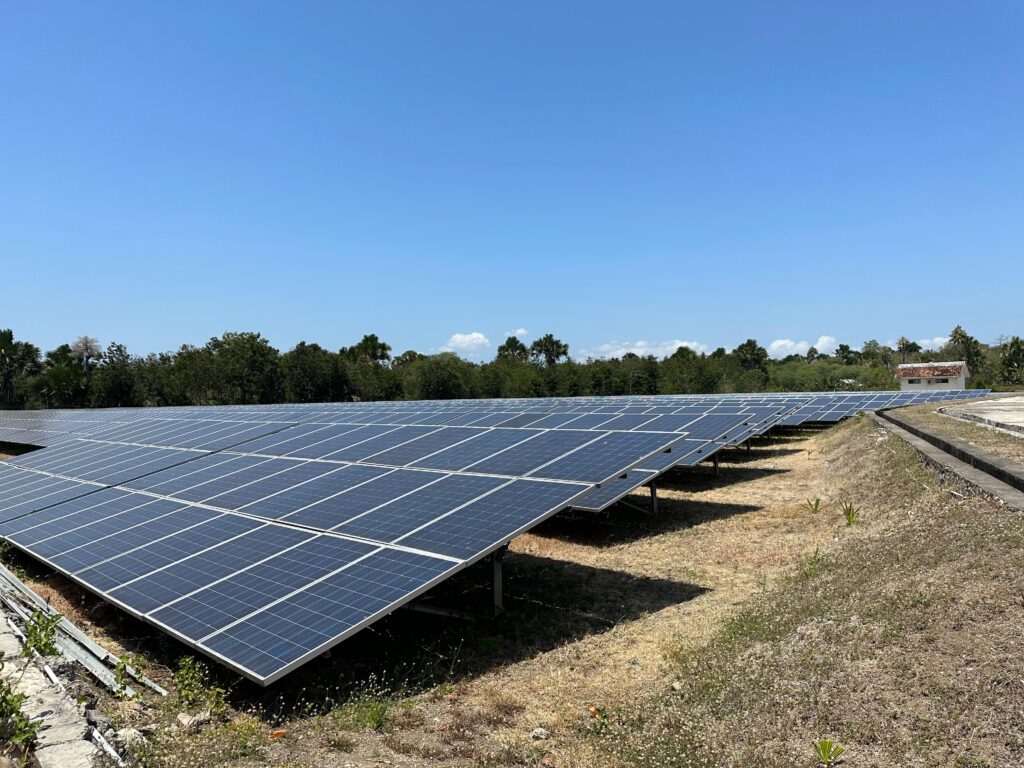
For provinces like NTT, where geography-wise (small islands, dry land, and dispersed communities) has significantly shaped the energy needs and climate risks, the gap between national policy and local realities creates a practical bottleneck. National plans tend to prioritize uniform targets and standardized approaches, while local conditions require flexible, smaller-scale, and community-driven energy systems. When local governments have limited space to adapt national policies to these realities, implementation becomes slower and more vulnerable to failure.
The financial aspect remains a challenge, particularly since DRE projects involve 3 phases: pre-construction, construction, and post-construction, with each phase requires financing. However, most funding available only covers the construction phase. The feasibility studies, permitting and social preparations, received limited support, while operational-and-maintenance costs are rarely funded. As the result, the electricity systems have frequently become non-functional despite the initial investment made.
Meanwhile, NTT has made an important progress in preparing the workforce. Six vocational high schools now have renewable energy majors, with approximately 600 to 800 students enrolled in RE-related courses. The provincial Job Training Center offers reskilling and certification services, including by sending trainees outside the province due to limited local expertise. Yet job absorption within NTT, remains limited. A national workers-transition roadmap is needed to connect training with employment opportunities across energy and non-energy sectors, such as repair services, agriculture processing, and enterprise development.
Institutionally, NTT’s Climate Change Working Group (Kelompok Kerja Perubahan Iklim/Pokja PI) plays a key role in aligning national agendas with local priorities by facilitating coordination across government, academia, civil society, and the private sector. However, its role is constrained by the limited authority and resources to operate. Strengthening the Working Group – and replicating similar structures elsewhere – is essential to ensure national policies are translated into local action.
Lessons from Other Countries: Challenges and Opportunities
Experiences from the Philippines, Nepal, and India reveal challenges that are similar with Indonesia, as well as lessons learned relevant for both national and subnational policy design. In the Philippines, centralized energy governance and procurement restrict the ability of province and communities to develop decentralized solutions. Local governments are often engaged only for administrative clearance – such as issuing permits or certifying project compliance – without the authority to influence how and when projects are implemented. Accessing funding through national government programmes involves lengthy, multi-layered approval processes, with the duration from proposal submissions to disbursement takes several years. This has weakening local momentum to scale DRE.In Province of Albay, local governments have actively promoted DRE through targeted provincial programmes and support for community-based deployment, helping to reduce system costs and improve affordability.
Nepal and India also experience similar governance-finance disconnection, where local actors carry national energy targets but lack of consistent funding for pre-construction studies, social preparation, and Operation & Maintenance (O&M). In several districts, solar infrastructure has experienced operational failure because batteries and spare parts cannot be replaced due to the absence of O&M financing. However, opportunities are still emerging.
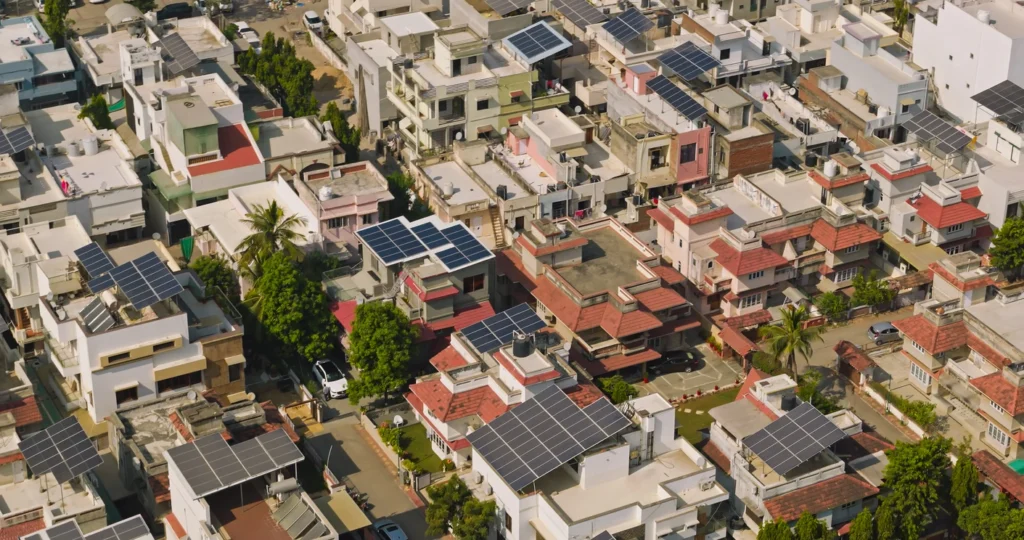
Nepal demonstrates how inclusive, community-led approaches can enhance system reliability and local ownership. Women-managed solar irrigation systems show that gender-responsive design is not only equitable but also practical for ensuring long-term functionality. These community-led renewable energy systems highlight the importance of linking renewable energy with broader livelihood systems.
India also offers lessons in flexible financing. In India, local governments have leveraged gender and poverty-alleviation budgets to procure clean cookstoves at scale, demonstrating that effective energy access solutions often emerged from creative use of existing funds rather than new instruments. Such approaches show the value of aligning financing with local institutional capacity.
Across these regions, local financial institutions – such as cooperatives and provincial banks – have expressed a willingness to fund renewable energy projects when the projects are bankable. This underscores the need for robust pre-construction processes and capacity building for village-level enterprises to design viable, low-risk proposals, which connect energy access with productive uses. For many communities, practical economic benefits – such as lower expenses, less dependence on fuel, and predictable long-term savings – are often more compelling than purely environmental messages.
The session highlighted a key conclusion: national energy transitions can only be effective when informed by subnational contexts and priorities. DRE systems show what is possible when communities are empowered, financing is sustainable, institutions are aligned, and workers are prepared for change. For Indonesia and its neighbour countries, grounding national frameworks in subnational experience is not just a good practice—it is essential for a just, inclusive, and resilient transition.

